Application engineering note
Mining and quarry
Fragment size, angularity, moisture and drop height govern the abrasion-and-impact combination.
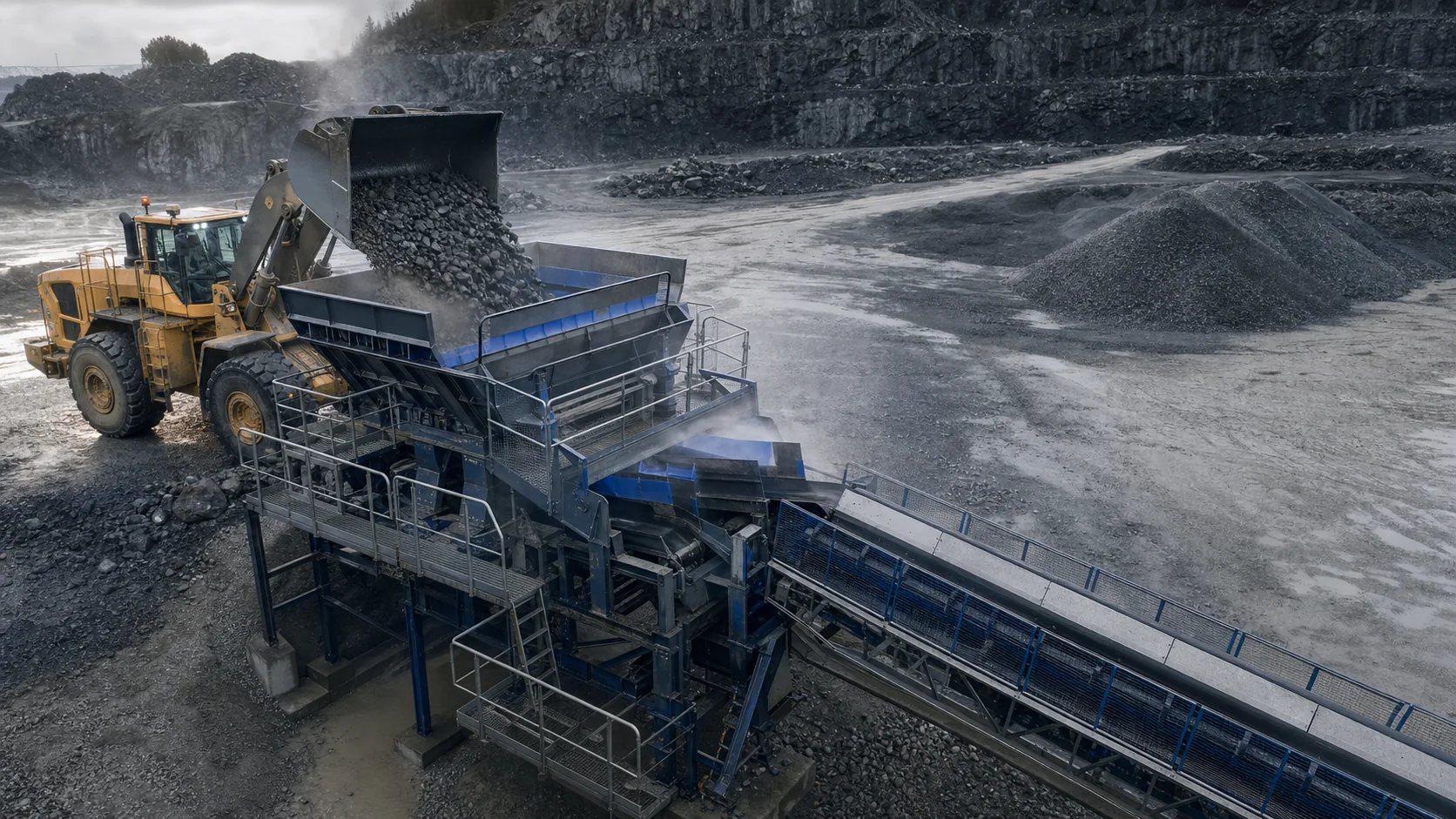
01 / Wear field
Dominant wear mechanisms
Indicative guidance. Actual plate layout, class and inspection plan are determined per order.
Indicative- 01Sliding abrasion
- 02Gouging abrasion
- 03Drop and transfer impact
02 / Component map
Components and high-wear zones
- 01Hoppers and chutes
- 02Liners and feeders
- 03Truck and bucket wear zones
03 / Selection gate
Questions before grade selection
- 01What are the material size and angularity?
- 02How do moisture and adhesion vary?
- 03What drop heights and impact angles occur?
- 04What throughput and operating time must the system handle?
| Nominal class | Decision basis |
|---|---|
| GOREX 400 | What are the material size and angularity? · How do moisture and adhesion vary? · What drop heights and impact angles occur? · What throughput and operating time must the system handle? |
| GOREX 450 | What are the material size and angularity? · How do moisture and adhesion vary? · What drop heights and impact angles occur? · What throughput and operating time must the system handle? |
| GOREX 500 | What are the material size and angularity? · How do moisture and adhesion vary? · What drop heights and impact angles occur? · What throughput and operating time must the system handle? |
04 / Fabrication
Design and fabrication
Indicative- 01Avoid unnecessary flow steps and detail replaceable liners with controlled joints.
- 02Control cut edges and welding procedure against actual plate data.
05 / Inspection
Inspection and replacement planning
Indicative- 01Measure sliding, impact and transition zones at repeatable reference points.
- 02Track attachment condition, local deformation and material build-up as well.
06 / Quote input
Bring operating data into the quotation
Describe material, impact, geometry, duty cycle, planned processing and requested inspection scope. The form is prefilled with this application category.